
Learning Sobering Histories
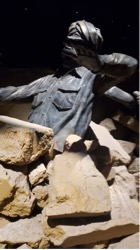
“I don’t think we should be here” I whispered to K in the Smitrivan Earthquake Museum in Bhuj. I already knew India was prone to natural calamities. The tectonic plate on which it resides keeps grinding into Asia, growing the Himalayas year by year and also making those areas geologically unstable. The air that flows over them picks up moisture and creates the monsoon rains that flood the cities. (Extremely Simplified Version) The coastlines are prone to cyclones and tsunamis, and Gujarat, more specifically Kutch, is situated on a pile of fault lines. It’s a time bomb that most recently went off 23 years ago and could re-occur any time.
January 26, 2001 people were getting up in the morning to get ready for Republic Day celebrations when the world began to shake. When it stopped, most of Bhuj was gone and all of Gujarat was heavily damaged. Buildings as far away as Vadodara and Surat were damaged. The Bhuj hospital was reduced to rubble. Part of this extraordinary museum included a simulated experience of the earthquake. The floor moves while a projection and soundscape of Bhuj plays around you and falls to bits. It felt like a very long time and we were reminded how poorly concrete buildings react to being moved.
Emergency crews from all over India were called in. International aid poured in. Tent cities were erected to house the newly homeless and medical centres were hastily built. 13,000 people died. Millions of buildings were destroyed and damaged. The aftershocks continued for two weeks, leaving residents terrified. They credit community singing for keeping up their hopes.
They also credit Modi. He was governor of Gujarat when this happened and to all appearances, he delivered when they needed him. He arranged much of the rescue efforts, acquired funds and began the “Build Back Better” campaign across Gujarat. No one can say he isn’t an effective administrator. Bhuj today looks relatively prosperous, which it actually is, but some of this impression is because the buildings are relatively new. The city was re-planned and neighbourhoods moved, which left some areas full of half destroyed buildings and you can see people still living in them. He was also credited with the creation of the Gujarat State Disaster Management Authority in the event of future disasters. This helps me somewhat to understand why Gujarati people are so loyal politically to Modi.
Leave a Reply
Posted by
Share: 

